Quick answer: Create a YouTube Live stream, copy the stream key into OBS, use supported encoder settings, and never show the key in screenshots or support chats.
Who this is for
This is for creators setting up OBS for YouTube Live for the first time or moving an existing channel to a VPS-based stream.
Practical baseline
| Scenario | Recommendation | Notes |
|---|---|---|
| New stream | Create in YouTube Studio | Copy key carefully |
| OBS setup | Paste key into Stream settings | Use CBR |
| 24/7 stream | Persistent key plus monitoring | Protect access |
| Key leak | Reset immediately | Treat it like a password |
Checklist
- Enable YouTube live streaming early.
- Copy the stream key only into trusted software.
- Use 2 second keyframe interval.
- Run an unlisted test.
- Rotate the key if it was exposed.
Mistakes to avoid
- Showing the key while screen sharing.
- Using variable bitrate.
- Changing stream URLs from old tutorials.
- Forgetting to check YouTube stream health.
Space-Node recommendation
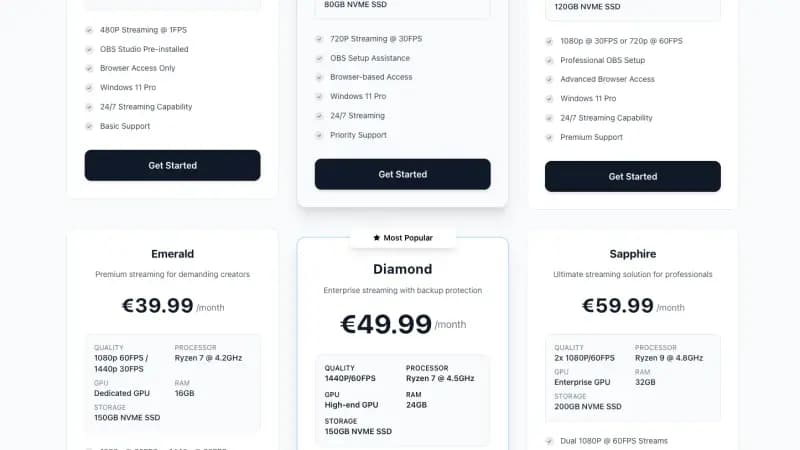
For always-on YouTube streams, run OBS on Streaming VPS and combine this with stream key security and monitoring guides.
FAQ
Is the cheapest option good enough?
Sometimes. The cheapest option is fine for testing, learning, and small private projects. For public servers, business workloads, monetized streams, or communities with regular users, stable uptime and support matter more than saving a few euros.
Should I choose managed hosting or a VPS?
Choose managed hosting when you want the service online quickly with less server administration. Choose a VPS when you need root access, custom software, Docker, unusual configs, or multiple services on one machine.
What should I check before ordering?
Check CPU, RAM, storage type, bandwidth policy, support scope, backups, upgrade path, and whether the product actually matches your workload. A good plan is the one that matches the bottleneck you will really hit.