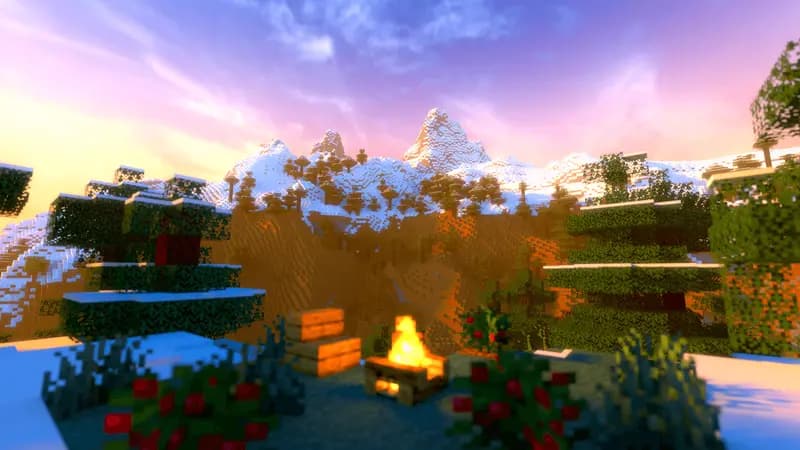
Quick answer: RLCraft needs 4-5GB minimum for a small group and 8GB for a comfortable public server. It is lighter on RAM than most modern modpacks because it runs on Minecraft 1.12.2, but it makes up for that with heavy entity and structure generation.
RAM by player count
| Players | Minimum RAM | Recommended RAM |
|---|---|---|
| 1-5 | 4GB | 5GB |
| 5-10 | 5GB | 6-8GB |
| 10-20 | 8GB | 10-12GB |
| 20+ | 10GB | 12-15GB |
These numbers are lower than what you'd expect from a similarly "hardcore" modern modpack, purely because RLCraft is stuck on the older 1.12.2 codebase which has a smaller memory footprint per chunk and entity than 1.20+.
Why RLCraft still lags on "enough" RAM
Memory is not RLCraft's real bottleneck. The mod that causes the most performance issues is Lycanites Mobs, which spawns custom creatures far more aggressively than vanilla Minecraft, along with dungeons that generate on the fly. This creates CPU tick lag long before you run out of memory. If your server is lagging with plenty of RAM free, the fix is usually:
- Lowering
mobSpawnChanceinconfig/lycanitesmobs/general.cfg - Reducing view distance to 8 or lower
- Pre-generating the world so chunk generation isn't happening live during play
Don't over-allocate
A common mistake is setting -Xmx far above what RLCraft actually uses. Over-allocating RAM to an old 1.12.2 modpack can actually hurt performance, since Java's garbage collector has to manage a larger heap even when it's mostly empty, leading to longer GC pause spikes. Match your allocation to the table above rather than assuming "more is always better."
Picking a plan
On Space-Node, MC Gold (5GB DDR4) covers small friend groups, and MC Diamond (8GB DDR4) is the most popular choice for public RLCraft servers with 10+ regular players. Larger communities running 20+ players should look at MC Special 1 (12GB DDR4) for headroom.
For the full installation and difficulty tuning walkthrough, see the RLCraft server setup guide.