
Quick answer: In mid July 2026, YouTube renamed and clarified its monetization policy covering low effort content, now grouped under "Generic or Repetitive Content" alongside two new named categories, "Unsatisfying or Off putting Content" and content involving AI personas on sensitive topics. YouTube has been explicit that this is a clarification of an existing rule, not a new one. It is aimed at templated AI slop and mass produced videos with no real variation, not at a properly run 24/7 stream with real overlays, licensed music and scene changes. This guide explains the actual policy language and what it means if you run an always-on OBS channel.
What actually changed
YouTube's policy on this kind of content has been renamed twice in about a year. It started as "repetitious content," was renamed to "Inauthentic content" in mid 2025, and in July 2026 YouTube updated its Partner Program help documentation again, this time landing on "Generic or Repetitive Content" as the umbrella category, with two additional named subcategories covering unsatisfying or off putting content and AI generated personas discussing sensitive topics. YouTube's own communication on this update, covered by outlets including TechCrunch and Tubefilter in July 2026, describes it as a clarification of standing rules rather than a new restriction.
The policy defines generic or repetitive content as material that looks like it was made from a template, that shows minimal variation across a channel's videos, or that is an image slideshow or scrolling text with no added value. The clear target is channels mass producing near identical videos with AI voiceover over stock footage and zero real commentary or production effort, the kind of output that no human team could plausibly produce at that volume.
Does this apply to 24/7 live streams
The wording is aimed primarily at uploaded video mills, but the underlying logic is worth taking seriously if you run a continuous channel. A stream that is a single unedited video file looping forever, with no overlays, no chat integration, no branding and no variation from day one to day one hundred, sits closer to the "minimal variation" description than a channel that changes playlists, adds a chat overlay, rotates visuals for different times of day, or occasionally switches to a live scene.
To be clear, we have not seen evidence that YouTube is specifically targeting 24/7 live streams as a category, and this policy update does not name looped streams. What it does tell you is the general direction YouTube's monetization review process is moving in: toward rewarding content that shows real production effort and away from content that looks fully automated and unchanging. A 24/7 channel that has always had real production value, meaning a custom overlay, a selected or licensed playlist, chat, and occasional live segments, is not the kind of content this policy describes.
What this means in practice for a 24/7 channel
If your channel is already built with OBS scenes, overlays and a rotating playlist rather than one static file on a loop, you are already on the right side of this. If your setup is closer to a single video looping unchanged for months, this is a reasonable moment to add some real variation:
- Rotate your source content. Use a VLC Video Source playlist or a folder of files instead of one file looping forever, so the visuals change over time.
- Add a visible overlay. A chat box, a now playing widget, a clock, or a simple branded lower third all count as real production, not just a stock video with audio behind it.
- Use licensed or royalty free music with proof of rights. This protects you on copyright grounds and adds a layer of intentional curation rather than an unattributed stock loop. See our royalty free music for 24/7 lofi streams guide for how to keep records.
- Vary the schedule. Even a simple daypart change, a different playlist for evenings versus overnight, shows the channel is actively managed rather than fully automated.
Why this favors a full OBS setup over a closed looper
This is also a practical argument for running OBS on your own server instead of a SaaS tool that only plays one uploaded file on repeat. With full OBS access you can add browser sources, swap playlists, run Advanced Scene Switcher for time based changes, and insert live segments whenever you want, all without re-uploading a video file. A closed looper that only supports one file on repeat has fewer ways to add the kind of variation this policy rewards. We cover this trade-off in more detail on our Gyre.pro alternative and Live247.io alternative pages, both of which compare a single file loop against a real OBS scene setup.
The bottom line
Nothing about this update should cause panic for a properly run 24/7 channel. YouTube says this is a clarification, not a new rule, and the plain language of the policy targets mass produced, templated, near identical AI content, not a genuine always-on stream with real overlays and selected content. If your setup has been a single unchanged loop for a long time, this is a good prompt to add variation anyway, both for this policy and because a channel with real production value tends to perform better regardless of any specific rule.
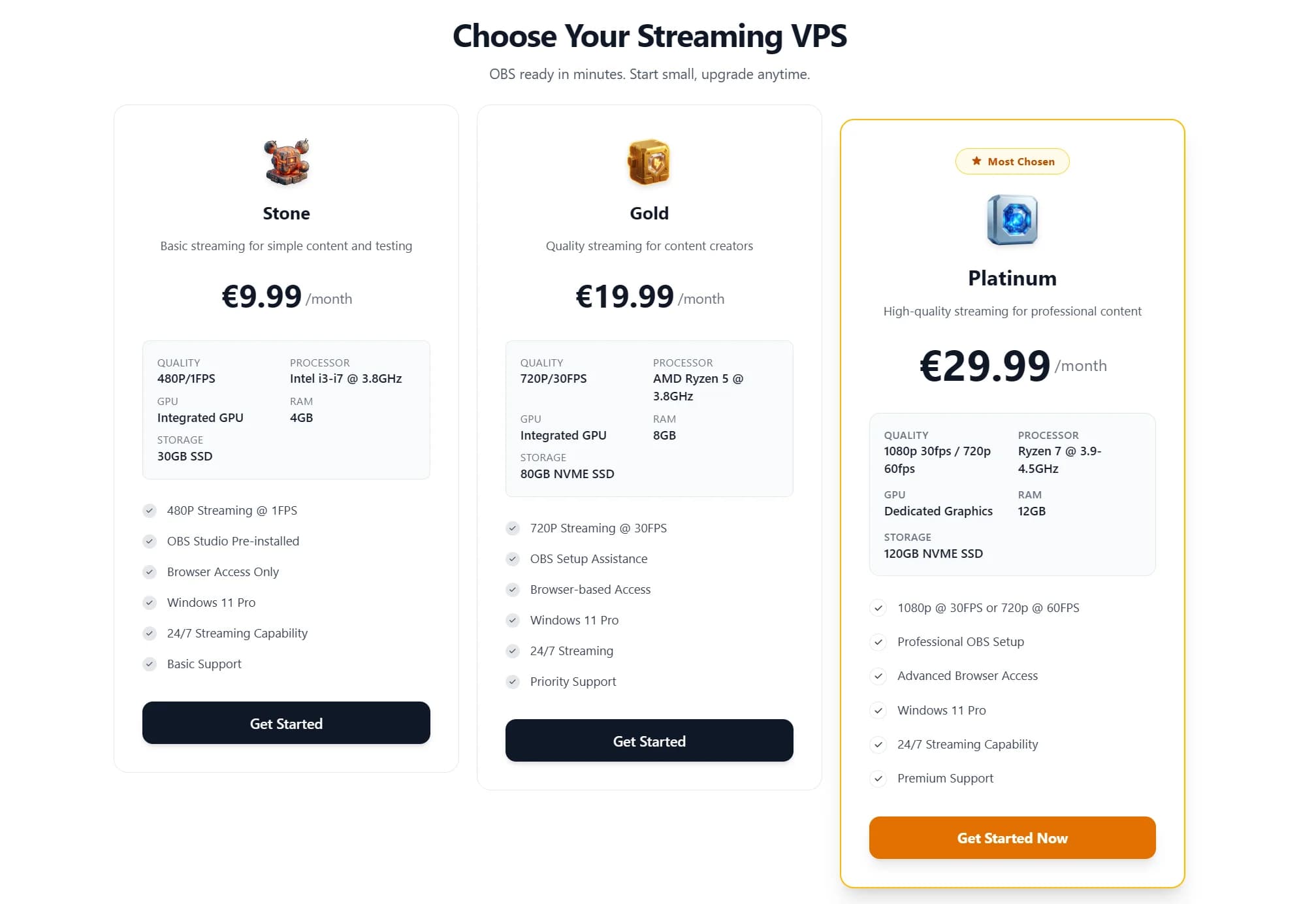
For the full checklist of settings and platform requirements we recommend for a 24/7 channel, see our YouTube Live streaming requirements guide, or view streaming VPS plans if you are setting up OBS for the first time.