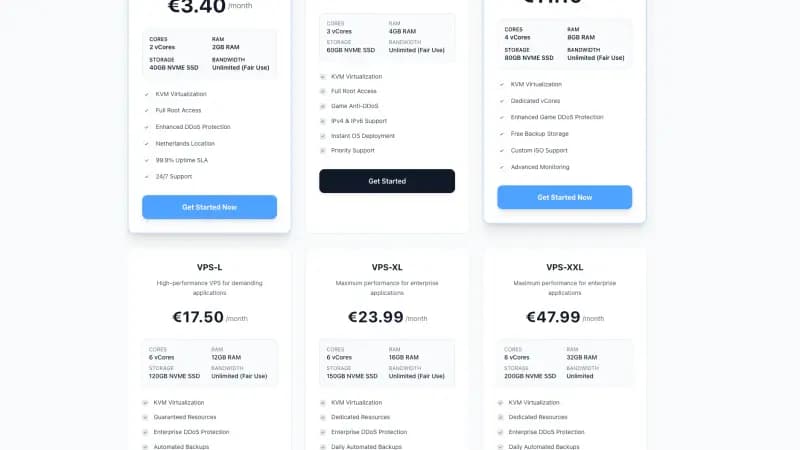
Quick answer: A fair VPS price depends on CPU allocation, RAM, NVMe storage, bandwidth, IPv4, support, and whether Windows licensing is included.
Who this is for
Use this if you are comparing monthly VPS plans for websites, staging servers, bots, Minecraft panels, n8n, or small business apps.
Practical baseline
| Scenario | Recommendation | Notes |
|---|---|---|
| Tiny VPS | Low monthly cost | Good for testing and bots |
| Mid VPS | Best value | Web apps, Docker, n8n |
| Large VPS | Higher monthly cost | Databases and heavier apps |
| Dedicated server | Custom pricing | Needed when isolation matters |
Checklist
- Compare CPU model and fair share policy.
- Check storage type and snapshot costs.
- Understand bandwidth or fair use limits.
- Ask about upgrade downtime.
- Do not compare Linux and Windows pricing blindly.
Mistakes to avoid
- Sorting by price only.
- Ignoring renewal pricing.
- Forgetting backups and monitoring.
- Buying a yearly plan before testing support.
Space-Node recommendation
Use VPS hosting to compare Space-Node monthly VPS plans, then pick the smallest plan that matches measured workload needs.
FAQ
Is the cheapest option good enough?
Sometimes. The cheapest option is fine for testing, learning, and small private projects. For public servers, business workloads, monetized streams, or communities with regular users, stable uptime and support matter more than saving a few euros.
Should I choose managed hosting or a VPS?
Choose managed hosting when you want the service online quickly with less server administration. Choose a VPS when you need root access, custom software, Docker, unusual configs, or multiple services on one machine.
What should I check before ordering?
Check CPU, RAM, storage type, bandwidth policy, support scope, backups, upgrade path, and whether the product actually matches your workload. A good plan is the one that matches the bottleneck you will really hit.