Quick answer: Twitch low latency mode usually reduces chat delay, but it does not fix unstable upload, overloaded OBS, or bad routing. Keep bitrate stable first.
Who this guide is for
This is for Twitch streamers who want faster chat interaction without causing buffering or dropped frames.
Recommended baseline
| Scenario | Baseline | Notes |
|---|---|---|
| Normal latency | More buffer | Safer for weak connections |
| Low latency | Faster chat | Better for interactive streams |
| Ultra low expectations | Not guaranteed | Viewer network still matters |
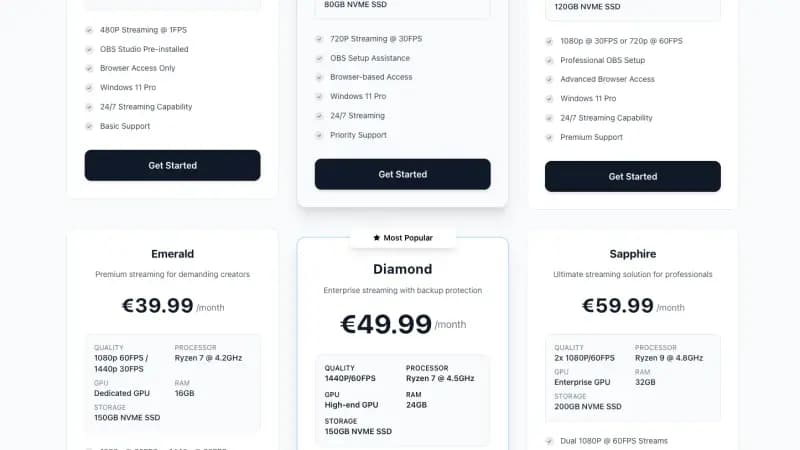
| Streaming VPS | Stable uplink path | Useful when home upload is weak |
Setup checklist
- Enable low latency in Twitch settings.
- Use CBR bitrate that your connection can hold.
- Keep keyframe interval at 2 seconds.
- Watch dropped frames in OBS.
- Test mobile viewer experience, not just desktop.
Common mistakes
- Using low latency as a fix for bad upload.
- Pushing bitrate too high for viewers.
- Ignoring encoder overload warnings.
- Changing many OBS settings at once.
Space-Node recommendation
Use Streaming VPS when your local upload or routing is the bottleneck. A VPS cannot remove all platform delay, but it can make the source feed steadier.
FAQ
Can I start smaller and upgrade later?
Yes. Start with the smallest plan that fits the baseline, monitor CPU, RAM, disk, and network for a few real sessions, then upgrade when the graphs show a bottleneck. Guessing too high wastes money. Guessing too low creates downtime.
Is bandwidth or CPU more important?
It depends on the workload. Video streaming cares about stable outbound bandwidth and encoding headroom. Minecraft, FiveM, Discord bots, and n8n usually hit CPU, RAM, database, or bad configuration first.
Should I use a VPS or a managed product?
Use a managed product when you want speed and support. Use a VPS when you need root access, custom software, Docker, or unusual workflows. If the workload is public or revenue critical, avoid anonymous ultra-cheap hosts with unclear limits.