Quick answer: For Kick, start with stable 1080p60 or 1080p30 settings before pushing bitrate higher. A stable stream beats a sharper stream that buffers.
Who this is for
This guide is for Kick creators configuring OBS, Streamlabs, or a streaming VPS and trying to pick safe bitrate settings.
Practical baseline
| Scenario | Recommendation | Notes |
|---|---|---|
| 720p30 | 2500 to 4000 Kbps | Low-risk testing |
| 1080p30 | 4500 to 6000 Kbps | Good baseline |
| 1080p60 | 6000 to 9000 Kbps | Needs headroom |
| Multistream | Plan for total output | VPS relay helps |
Checklist
- Use CBR rate control.
- Set keyframe interval to 2 seconds.
- Watch OBS dropped frames.
- Test your upload for longer than five minutes.
- Keep a lower-bitrate fallback profile.
Mistakes to avoid
- Maxing bitrate because the dashboard accepts it.
- Confusing encoder overload with network drops.
- Changing encoder, bitrate, and resolution all at once.
- Ignoring viewer mobile connections.
Space-Node recommendation
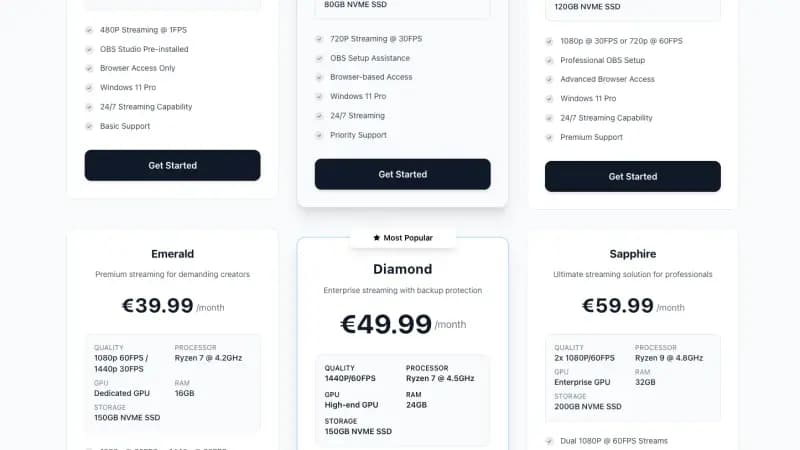
Use Streaming VPS if local upload is unstable or you need Kick plus other platforms running 24/7.
FAQ
Is the cheapest option good enough?
Sometimes. The cheapest option is fine for testing, learning, and small private projects. For public servers, business workloads, monetized streams, or communities with regular users, stable uptime and support matter more than saving a few euros.
Should I choose managed hosting or a VPS?
Choose managed hosting when you want the service online quickly with less server administration. Choose a VPS when you need root access, custom software, Docker, unusual configs, or multiple services on one machine.
What should I check before ordering?
Check CPU, RAM, storage type, bandwidth policy, support scope, backups, upgrade path, and whether the product actually matches your workload. A good plan is the one that matches the bottleneck you will really hit.
Related: OBS audio settings for a clean voice