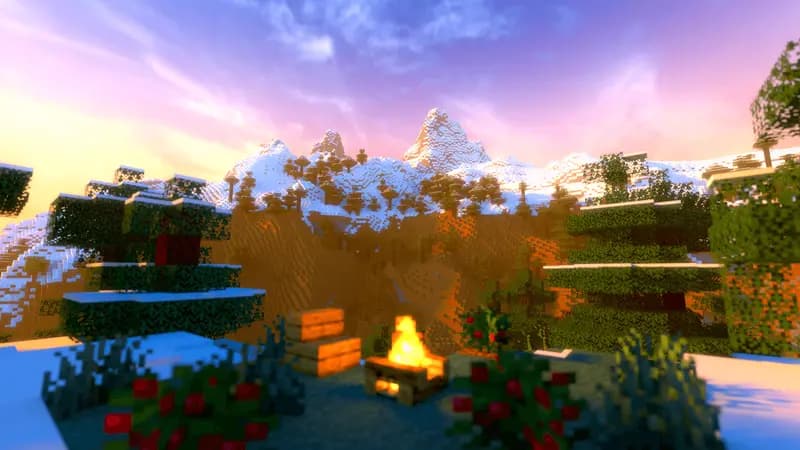
If you've been running an All The Mods 10 server for the past several months, you already know that the "kitchen sink" modpack series from the ATM team is one of the most demanding payloads you can throw at a Minecraft server. Now, the next generation is on the horizon: All The Mods 11 (ATM11) has entered alpha testing on Minecraft 1.21.2, and it continues the trend of running exclusively on the NeoForge loader.
Getting your infrastructure prepared now-before the massive wave of players migrates from ATM10 to ATM11-is the difference between a smooth launch day and a catastrophic server meltdown. This guide outlines the expected hardware requirements, explain what the NeoForge 1.21.2 migration means for your setup, and ensure you're ready to deploy from day one.
The NeoForge 1.21.2 Migration
ATM11 cements what ATM10 already established: the Minecraft modding ecosystem has permanently shifted away from legacy Forge toward NeoForge. If you haven't already familiarized yourself with NeoForge's distinct API and registry system, now is the time. Our NeoForge vs Forge vs Fabric comparison guide covers the technical split in depth.
What does this mean practically for ATM11?
- Your ATM10 mods will not transfer. Do not attempt to copy your ATM10
mods/folder into an ATM11 server directory. The NeoForge API revision between 1.21.1 and 1.21.2 introduces breaking changes in how registries and data components are handled. You will encounter immediate crashes if you attempt to force incompatible mod versions. - Java 21 remains mandatory. ATM11 continues to require Java 21 as the minimum runtime. If your infrastructure is still running Java 17, you must upgrade before attempting to launch.
- Startup flags should use ZGC. As we detailed in our ATM10 optimization guide, the Generational Z Garbage Collector is the only sane choice for heavy modpacks. ATM11 will be no different.
Expected Hardware Requirements
While ATM11 is still in alpha and the final mod list will change, the ATM series follows a consistent pattern of escalating demands with each generation. ATM9 ran comfortably on 8-12GB. ATM10 pushed the baseline to 10-16GB. Based on the alpha builds and the trajectory of the series, here is what we expect:
| Player Count | RAM (Expected) | CPU | Storage |
|---|---|---|---|
| 1-5 players | 10-12GB | 4+ cores, 3.8GHz+ | 60GB NVMe |
| 6-12 players | 12-14GB | 4+ cores, 4.0GHz+ | 100GB NVMe |
| 13-25 players | 14-18GB | 6+ cores, 4.2GHz+ | 120GB NVMe |
| 25+ players | 18-24GB+ | 8+ cores, 4.5GHz+ | 150GB+ NVMe |
Why NVMe Storage is Non-Negotiable
Every iteration of All The Mods introduces more biomes, more structures, and more custom dimensions. ATM11 on 1.21.2 will use the latest data-driven world generation features, meaning the server writes significantly more data to disk during chunk generation than vanilla Minecraft.
If you're still hosting on traditional HDDs or even standard SATA SSDs, you will experience agonizing chunk-loading stutter the moment a single player opens an Elytra and starts exploring. NVMe drives communicate directly with the motherboard's PCIe bus, ensuring that terrain data is read and written at speeds that keep pace with even the fastest explorers.
The CPU Reality
Minecraft's game loop remains predominantly single-threaded in 1.21.2. This means raw clock speed matters much more than core count. A processor running at 5.0GHz on a single core will absolutely dominate a processor running at 3.0GHz across sixteen cores.
This is precisely why AMD Ryzen processors-like the Ryzen 9 9950X and Ryzen 9 9950X-are the gold standard for modded Minecraft. These chips deliver the single-thread dominance required to keep your TPS locked at a perfect 20.0, even when players are simultaneously crafting complex automation systems and generating new terrain.
Recommended Startup Flags for ATM11
Based on the alpha builds and our experience tuning ATM10 servers, we recommend the following Java 21 Generational ZGC startup configuration:
#!/bin/bash
java -Xms12G -Xmx12G -XX:+UseZGC -XX:+ZGenerational -XX:+AlwaysPreTouch \
  -XX:+DisableExplicitGC -XX:+PerfDisableSharedMem \
  -jar server.jar nogui
Key points:
- Set
-Xmsand-Xmxto the exact same value so ZGC doesn't waste cycles resizing the heap. - Always leave 2-4GB of RAM free for the operating system and background processes.
- Do not use legacy G1GC flags. With heap sizes above 10GB, G1GC will cause devastating server-wide freezes during garbage collection cycles. ZGC keeps pauses under a single millisecond.
Preparing Your Infrastructure Now
The smartest move you can make as a server administrator is to have your infrastructure provisioned and tested before ATM11 hits its stable release. When the stable build drops, thousands of communities will simultaneously attempt to migrate, and the demand for high-performance hosting will spike dramatically.
Space-Node's premium Minecraft hosting plans are built for the demands of kitchen-sink modpacks like the ATM series. Our infrastructure features AMD Ryzen processors, unshared DDR5 memory, and dedicated NVMe storage-the exact hardware profile that ATM11 will demand. By provisioning your server now, you bypass the launch-day rush and ensure your community has a lag-free experience from the very first session.