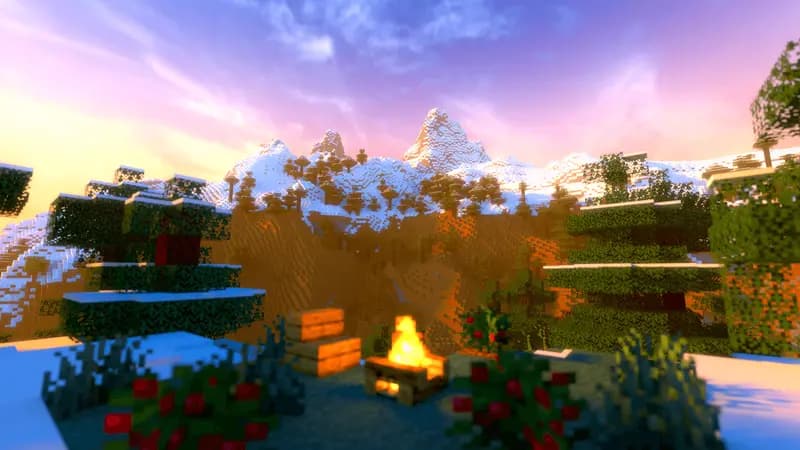
If you've been searching for how to install Better on Bedrock on a dedicated server, you've probably already discovered that it's not as simple as dropping a .jar file into a folder. Better on Bedrock is a Bedrock Edition add-on experience-not a Java modpack. You don't install it with Forge, Fabric, or NeoForge. Instead, you install the Bedrock behavior pack, resource pack, and the world-level JSON references that tell the server to load them.
This distinction trips up a huge number of administrators who are accustomed to Java server workflows. This guide walks through the entire installation process step by step, explains the underlying architecture of how Bedrock packs work, troubleshoots every common failure mode, and gets your server running Better on Bedrock correctly.
Before You Start: Understanding the Bedrock Pack Architecture
The Bedrock Edition of Minecraft handles modifications completely differently from Java. There are no mod loaders, no JAR files, and no startup flags. Instead, Bedrock uses a two-layer pack system:
- Behavior Packs (BP): These define the logic of the add-on-custom mob behaviors, new crafting recipes, entity spawning rules, and gameplay mechanics. They are the "server-side" component.
- Resource Packs (RP): These define the visuals-custom textures, models, sounds, and UI elements. Players must download these to see the add-on's content correctly.
Both packs are identified by a UUID (Universally Unique Identifier) and a version array stored in a manifest.json file within each pack folder. The server knows which packs to load by reading JSON reference files inside your world directory.
This is a fundamentally different paradigm from Java modding. Once you understand this architecture, the installation process becomes entirely logical.
Quick Install Checklist
For experienced administrators who just need the steps:
- Start with a clean Bedrock Dedicated Server (BDS) installation or a copy of your existing world.
- Obtain the Better on Bedrock behavior pack and resource pack folders.
- Upload the behavior pack folder to
behavior_packs/. - Upload the resource pack folder to
resource_packs/. - Add the pack UUID and version to
world_behavior_packs.jsoninside your world folder. - Add the resource pack UUID and version to
world_resource_packs.jsoninside your world folder. - Enable any required experimental gameplay toggles in the world settings.
- Restart the Bedrock server and verify the console output confirms the packs loaded.
If you need a deeper explanation of each step, continue reading.
Step-by-Step Installation
Step 1: Set Up the Bedrock Dedicated Server
If you haven't already, download the official Bedrock Dedicated Server (BDS) software from the Minecraft website and extract it to a directory on your VPS:
mkdir bedrock-server && cd bedrock-server
unzip bedrock-server-[VERSION].zip
Run the server once to generate the default world and configuration files:
chmod +x bedrock_server
LD_LIBRARY_PATH=. ./bedrock_server
Stop the server after it finishes generating the default world (Ctrl+C).
Step 2: Obtain the Pack Files
Better on Bedrock consists of two folders that you need to locate:
BetterOnBedrockBP/- the behavior packBetterOnBedrockRP/- the resource pack
Each folder must contain a valid manifest.json file. If you obtained the add-on from the Marketplace and only have a .mcworld or .mcaddon file, you can extract it (these are simply ZIP archives with a different extension):
# .mcaddon files are ZIP archives
cp BetterOnBedrock.mcaddon BetterOnBedrock.zip
unzip BetterOnBedrock.zip -d extracted-packs/
This will produce the behavior and resource pack folders.
Step 3: Upload the Packs
Upload the extracted pack folders to the correct locations within your BDS installation:
bedrock-server/
  behavior_packs/
    BetterOnBedrockBP/
      manifest.json
      entities/
      scripts/
      ...
  resource_packs/
    BetterOnBedrockRP/
      manifest.json
      textures/
      models/
      ...
  worlds/
    Bedrock level/
      world_behavior_packs.json
      world_resource_packs.json
      level.dat
      db/
The folder names can vary. The critical requirement is that each folder contains a valid manifest.json at its root.
Step 4: Register the Packs via UUID
This is the step where most installations fail. Simply placing the pack folders in the directory is not enough. You must explicitly tell your world to load them by referencing their UUIDs.
Open the behavior pack's manifest.json and locate the header block:
{
  "header": {
    "name": "Better on Bedrock BP",
    "uuid": "a1b2c3d4-e5f6-7890-abcd-ef1234567890",
    "version": [1, 2, 0]
  }
}
Copy the uuid and version values. Now open (or create) the file worlds/Bedrock level/world_behavior_packs.json and add the reference:
[
  {
    "pack_id": "a1b2c3d4-e5f6-7890-abcd-ef1234567890",
    "version": [1, 2, 0]
  }
]
Repeat this process for the resource pack. Open its manifest.json, copy its UUID and version, and add them to worlds/Bedrock level/world_resource_packs.json:
[
  {
    "pack_id": "f0e1d2c3-b4a5-6789-0fed-cba987654321",
    "version": [1, 2, 0]
  }
]
Critical: The
pack_idmust exactly match theuuidin the manifest, and theversionarray must be identical. A single mismatched digit will cause the server to silently ignore the pack.
Step 5: Enable Experimental Gameplay (If Required)
Many Bedrock add-ons-including certain features of Better on Bedrock-require experimental gameplay toggles to be enabled. These toggles are stored within the world data itself, not in server.properties.
The safest method is:
- Open Minecraft Bedrock on a local device (PC, mobile, or console).
- Create a new world or load a copy of your server world.
- Go to Settings > Experiments and enable the required toggles (e.g., "Holiday Creator Features," "Custom Biomes," etc.).
- Apply the Better on Bedrock packs to the world in-game.
- Export the world.
- Upload the exported world folder to your server, replacing the existing world directory.
Do not attempt to guess which experiments to enable on a live world. Always test on a copy first.
Step 6: Force Resource Pack Downloads
If Better on Bedrock includes custom textures, models, or sounds, you must force connecting players to download the resource pack. In your server.properties, set:
texturepack-required=true
Without this setting, players who decline the resource pack download will see missing textures and broken visuals.
Step 7: Start and Verify
Restart the Bedrock Dedicated Server:
LD_LIBRARY_PATH=. ./bedrock_server
Watch the console output carefully. You should see lines confirming that both packs were loaded:
[INFO] Loaded behavior pack: Better on Bedrock BP v1.2.0
[INFO] Loaded resource pack: Better on Bedrock RP v1.2.0
If you see errors about missing packs or UUID mismatches, double-check Steps 4 and 5.
Common Problems and Solutions
The server starts but the add-on does nothing
The behavior pack is not being loaded. Verify that:
- The UUID in
world_behavior_packs.jsonexactly matches themanifest.jsonheader. - The version array is identical (e.g.,
[1, 2, 0]not[1, 0, 0]). - The pack folder is placed directly inside
behavior_packs/, not nested inside a subdirectory.
Custom textures are missing or broken
The resource pack is not loading correctly. Check:
- The
world_resource_packs.jsoncontains the correct UUID. texturepack-required=trueis set inserver.properties.- Players have accepted the resource pack download prompt.
The world crashes immediately on startup
This is almost always caused by:
- A pack that requires experimental features that aren't enabled in the world data.
- A corrupt
.mcworldexport. - An incompatible BDS version (ensure your server version matches the pack's minimum version requirement).
Always test the world locally before uploading to production.
Marketplace content won't load on a dedicated server
Some Marketplace content is tied to local entitlements (DRM-protected purchases). If you cannot extract the behavior and resource pack folders from the Marketplace download, the content may not be compatible with a standalone Bedrock Dedicated Server. Look for the "free" or "creator" versions of the add-on that distribute raw pack files.
Better on Bedrock vs. Better MC: Don't Confuse Them
This is a surprisingly common source of confusion:
- Better on Bedrock is a Bedrock Edition add-on. It uses behavior packs and resource packs on a Bedrock Dedicated Server.
- Better MC is a Java Edition modpack. It runs on Forge or NeoForge and requires a completely different server architecture.
If you want Bedrock players to join a Java-based Better MC server, you need GeyserMC for crossplay. Read our GeyserMC Crossplay Guide for that setup.
Hosting a Better on Bedrock Server
While the Bedrock Dedicated Server is generally lighter on resources than a heavy Java modpack, Better on Bedrock adds significant overhead through custom entity behaviors, modified mob AI, and additional world generation logic. For a smooth multiplayer experience:
| Players | RAM | CPU | Storage |
|---|---|---|---|
| 2-5 | 4-6GB | 2+ cores, 3.5GHz+ | 20GB NVMe |
| 6-15 | 6-8GB | 4+ cores, 3.8GHz+ | 40GB NVMe |
| 15+ | 8-12GB | 4+ cores, 4.0GHz+ | 60GB NVMe |
Space-Node's VPS plans provide the dedicated resources, NVMe storage, and low-latency networking required to keep your Bedrock server responsive and lag-free. Whether you're running a small friends-only world or a large community server, our infrastructure ensures every behavior pack script executes without delay.
Explore Bedrock-Ready VPS Hosting
FAQ
Can you install Better on Bedrock on a dedicated server?
Yes. Upload the behavior pack and resource pack folders to the server, reference their UUIDs in the world JSON files, enable any required experiments, and restart the server.
Can I install Better on Bedrock with Forge or NeoForge?
No. Forge and NeoForge are Java Edition mod loaders. Bedrock add-ons use behavior packs and resource packs exclusively.
Can console players join a Better on Bedrock server?
Console players (Xbox, PlayStation, Switch) can join a Bedrock Dedicated Server if they can connect to the server address. Some platforms may require additional networking configuration (e.g., DNS redirection for consoles that don't natively support custom server addresses).
Should I upload just the pack files or a full world export?
A full tested world export is usually the safest approach, especially if the add-on depends on experimental features, custom world settings, or template data that must be baked into the level.dat file.