Discord bots usually start on a laptop. That works for testing, but a community bot needs to stay online when your computer is closed, your internet restarts, or the process crashes. Hosting gives the bot a stable home.
This guide covers practical hosting choices for Node.js and Python Discord bots in 2026.
What a Discord bot needs
Most bots need four things:
- A runtime such as Node.js or Python
- A process manager to restart the bot after crashes
- Logs so you can see errors
- A database or file storage if the bot saves data
Small bots do not need huge servers. They need consistency.
Node.js bot hosting
Node.js bots usually use libraries such as discord.js. A common production setup uses npm, environment variables, and PM2.
Basic flow:
npm install
npm run build
pm2 start dist/index.js --name my-discord-bot
pm2 save
Keep the bot token in an environment file or panel secret field. Never commit it to GitHub.
Python bot hosting
Python bots often use discord.py, nextcord, pycord, or interactions.py. Use a virtual environment so dependencies stay clean.
Basic flow:
python3 -m venv .venv
source .venv/bin/activate
pip install -r requirements.txt
pm2 start bot.py --name my-python-bot --interpreter .venv/bin/python
pm2 save
Python bots can be just as reliable as Node.js bots if the environment and process manager are configured properly.
Database choices
For a small bot, SQLite can be enough. For a public moderation, economy, or dashboard bot, use MySQL, MariaDB, or PostgreSQL.
Choose based on the data:
| Bot type | Database suggestion |
|---|---|
| Simple utility bot | SQLite or JSON only if tiny |
| Moderation bot | MySQL/MariaDB/PostgreSQL |
| Economy bot | MySQL/MariaDB/PostgreSQL |
| Dashboard bot | PostgreSQL or MySQL |
| Multi-server SaaS bot | Managed database or dedicated DB server |
Back up the database, not just the bot files.
RAM and CPU sizing
Most small bots fit on a small VPS. Bigger bots need more memory when they cache many guilds, run dashboards, process queues, or handle music/audio.
Suggested starting points:
| Bot size | Suggested resources |
|---|---|
| Small private bot | 1 GB RAM |
| Community utility bot | 2 GB RAM |
| Bot with dashboard/database | 2-4 GB RAM |
| Large multi-guild bot | 4 GB or more |
CPU spikes are usually caused by inefficient loops, bad database queries, image generation, or too many scheduled jobs.
Logs and restarts
If your bot silently dies, users lose trust. PM2 or a similar process manager should restart it, but you still need logs.
Check:
- Startup errors
- Discord gateway disconnects
- Missing permissions
- Rate limit warnings
- Database connection failures
- Unhandled promise rejections or exceptions
Good logs make support faster and keep small issues from becoming mysteries.
Hosting Discord bots at Space-Node
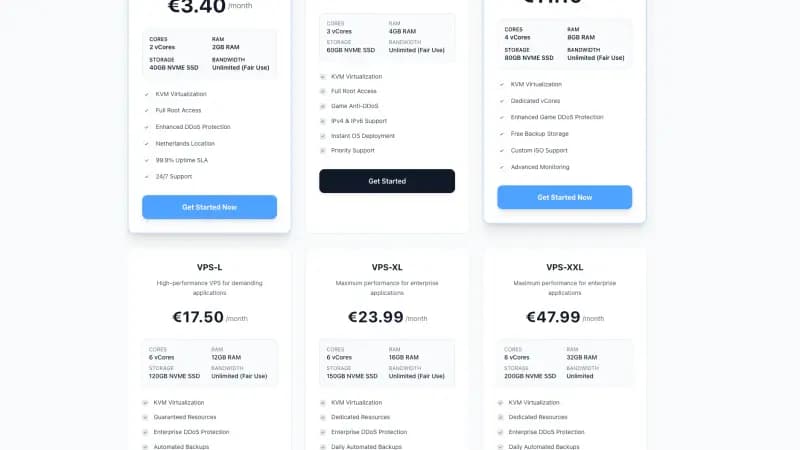
Space-Node offers Discord bot hosting and VPS hosting for bots that need 24/7 uptime, stable networking, and room for databases or dashboards.
Bottom line
Discord bot hosting is mostly about reliability. Use the right runtime, keep tokens secret, run the bot under a process manager, store data safely, and size the VPS around actual workload instead of guesswork.
Need your bot online 24/7? Explore Space-Node hosting for Node.js, Python, dashboards, and community tools.