A 24/7 YouTube live stream sounds simple. You loop a video, press go live, and let it run. In practice, most 24/7 streams fail because of one boring problem: stability.
This guide is for people who want a stream that stays online without babysitting it.
Table of Contents
- What a VPS is and why people use it for streaming
- The real cost of 24/7 streaming
- Specs that matter for a stable stream
- The common failure points
- A simple setup approach
1. What a VPS is and why people use it for streaming
A VPS is a virtual server that runs in a datacenter. People use it for streaming because datacenters tend to be more stable than home networks.
If your home internet drops for five minutes, your stream dies. If your PC restarts, your stream dies. If Windows updates at the wrong time, your stream dies.
A server can reduce those problems.
2. The real cost of 24/7 streaming
The "cost" is not only the monthly plan.
Your real cost includes the time you spend restarting streams, fixing OBS, and dealing with random downtime.
A cheap VPS can be fine, but cheap often means shared CPU and unstable performance. If your stream is simple, you can use modest specs. If you add overlays, browser sources, or higher resolution, you will need more.
If you monetize your channel, stability matters. A stream that goes down daily loses watch time, consistency, and trust.
3. Specs that matter for a stable stream
For a basic looped stream, you need enough CPU to encode, enough RAM for the OS and OBS, and stable network output.
Hardware encoding helps if your provider supports it. If not, CPU encoding can still work if the CPU is strong enough.
The most important thing is stable performance. A stream that runs fine for an hour and then stutters is usually on a noisy shared node.
4. The common failure points
The most common breakpoints are surprisingly simple.
The stream key gets reset or copied wrong.
OBS is configured with an aggressive bitrate that the server cannot hold.
A browser source leaks memory over time.
The VPS is too small and runs out of RAM.
The provider restarts the node or your container without warning.
If you avoid those, you are already ahead of most 24/7 channels.
5. A simple setup approach
A simple approach is best.
First, decide your stream type. If it is a loop, keep the scene simple. Avoid too many browser sources.
Second, choose stable OBS settings. A consistent bitrate is better than pushing for maximum quality.
Third, set up monitoring. At minimum, check that the stream is live. If you can, set an alert when it goes offline.
Fourth, plan for restarts. If the server restarts, you want the stream to come back automatically.
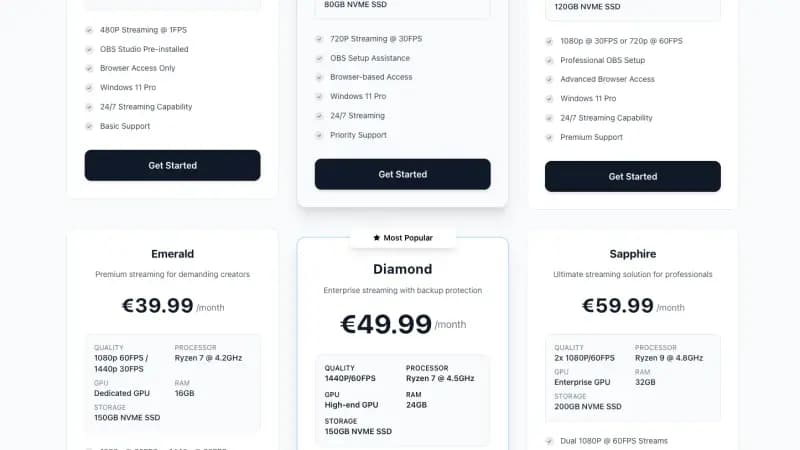
If you want server options built for streaming, see our streaming VPS plans, which come with OBS pre-installed. Our general VPS plans are out of stock until about the end of October.
If you want deeper OBS tuning, read /blog/obs-settings-247-streaming-guide.