Start small, grow as needed. Scaling a VPS isn't about guessing future requirements. It's about monitoring current usage and upgrading at the right time.
Right-Sizing: Start Small
| Common Mistake | Better Approach |
|---|---|
| "I might need 16GB RAM" | Start with 2GB, monitor, upgrade |
| "Get extra CPU just in case" | Start with 2 cores, scale up if needed |
| "100GB storage for safety" | Start with 25GB, extend later |
Over-provisioning wastes money. Under-provisioning just means you upgrade sooner.
When to Scale Up
CPU Triggers
# Check load average
uptime
# Load consistently > number of cores = time to upgrade
| Metric | Green | Yellow | Red (Scale Up) |
|---|---|---|---|
| Load average | < cores | = cores | > cores for 1+ hour |
| CPU usage | < 70% | 70-85% | > 85% sustained |
| Response time | Normal | +20% | +50% |
Memory Triggers
# Check memory
free -h
| Metric | Green | Yellow | Red (Scale Up) |
|---|---|---|---|
| RAM used | < 70% | 70-85% | > 85% |
| Swap usage | 0 | < 50MB | > 100MB consistently |
| OOM kills | 0 | Rare | Any frequency |
Storage Triggers
# Check disk
df -h
| Metric | Green | Yellow | Red (Scale Up) |
|---|---|---|---|
| Disk used | < 70% | 70-85% | > 85% |
| Inode usage | < 70% | 70-85% | > 85% |
Vertical Scaling (Bigger VPS)
Scaling up means getting a bigger server:
| Current | Upgrade To | When |
|---|---|---|
| 1 core, 1GB RAM | 2 cores, 2GB RAM | RAM or CPU bottleneck |
| 2 cores, 2GB RAM | 2 cores, 4GB RAM | RAM bottleneck only |
| 2 cores, 4GB RAM | 4 cores, 8GB RAM | Both CPU and RAM |
Pros and Cons
| Pro | Con |
|---|---|
| Simple (just upgrade) | Brief downtime for migration |
| No architecture changes | Hard limit on single-server scale |
| Same IP and config | Cost grows linearly |
Horizontal Scaling (More Servers)
Scaling out means adding more servers:
| Architecture | Use Case |
|---|---|
| Load balancer + 2 app servers | Web application |
| App server + separate DB server | Database-heavy apps |
| Primary + replica database | Read-heavy workloads |
| Multiple specialized servers | Complex applications |
When Horizontal Makes Sense
- Single server can't handle the load at any available size
- You need high availability (redundancy)
- Different components have different resource needs
- Database performance needs dedicated hardware
Application-Level Optimization
Before scaling hardware, optimize software:
| Optimization | Effort | Impact |
|---|---|---|
| Enable caching (Redis, Memcached) | Low | High |
| Optimize database queries | Medium | High |
| Add CDN for static content | Low | Medium |
| Enable PHP OPcache | Low | Medium |
| Compress responses (gzip/brotli) | Low | Low-Medium |
| Optimize images | Low | Medium |
Often, $0 in optimization provides more improvement than $20/month in hardware upgrades.
Monitoring Setup
Install monitoring to make scaling decisions based on data:
# Simple monitoring script
#!/bin/bash
echo "$(date) | CPU: $(top -bn1 | grep Cpu | awk '{print $2}')% | RAM: $(free | grep Mem | awk '{printf("%.1f%%", $3/$2 * 100)}') | Disk: $(df / | tail -1 | awk '{print $5}')" >> /var/log/server-metrics.log
Run every 5 minutes:
*/5 * * * * /opt/monitor/metrics.sh
Review weekly to spot trends before they become problems.
Growth Planning
| Project Size | Recommended Start | Next Upgrade |
|---|---|---|
| Personal project | 1 core, 1GB | When it grows |
| Small business site | 2 cores, 2GB | When traffic doubles |
| Medium web app | 2 cores, 4GB | Based on monitoring |
| Game server | 4 cores, 8GB | Based on player count |
| SaaS application | 4 cores, 8GB | Based on user growth |
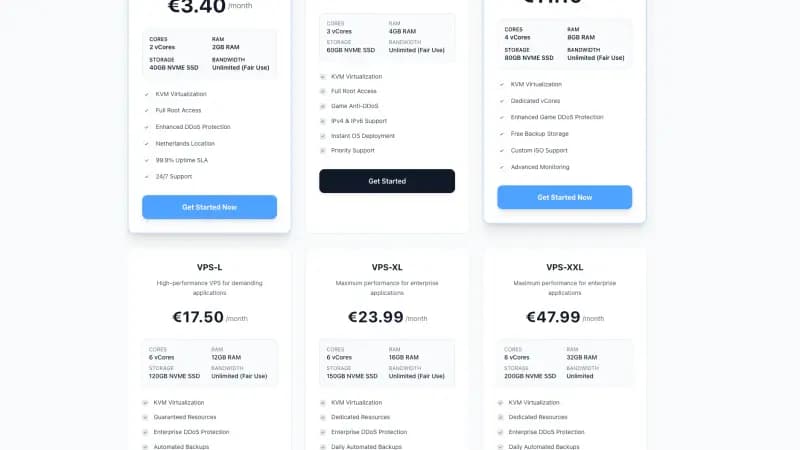
Space-Node's VPS hosting offers upgradable plans. Start small, monitor your usage, and scale up when your data tells you it's time. No lock-in, no over-provisioning.