Picture this: Your website crashes during traffic spikes, your trading bot hits resource limits, or your streaming setup needs 24/7 reliability. That's where VPS hosting becomes your game-changer. A virtual private server gives you dedicated resources and control without the cost of a dedicated server.
Whether you're a developer, trader, or business owner, understanding what to look for before you buy VPS hosting can save you time, money, and headaches. In 2025, from free VPS trials to enterprise cloud VPS hosting, the options are endless. But here's the challenge: with hundreds of VPS providers offering everything from cheap VPS server deals to premium managed VPS hosting, how do you separate marketing hype from real value?
The truth is, most people make critical mistakes when choosing their first VPS hosting provider, overpaying for features they don't need, underestimating their actual requirements, or falling for "unlimited" promises that come with hidden limitations. This guide covers the 7 most critical things you need to know before you buy VPS online, helping you make an informed decision that serves your projects for years to come.
Table of Contents
- Match Your Use Case to VPS Requirements
- Windows vs Linux VPS Decision
- Managed vs Unmanaged Hosting
- Real VPS Costs Beyond Base Pricing
- Performance and Server Location
- Scalability and Growth Planning
- Support Quality Evaluation
1. Match Your Use Case to VPS Requirements
Understanding Your Actual Needs
Before comparing VPS server price options, you need to honestly assess what you're building. The best VPS hosting for Forex VPS trading isn't the same as the best cheap VPS for development work. Getting this wrong means either overpaying for resources you don't need or struggling with performance issues because you under-provisioned your setup.
Think about your specific scenario. Are you running an eCommerce store that needs consistent performance during traffic spikes? You'll want VPS web hosting with guaranteed resources and possibly managed VPS hosting to handle the technical complexity. Maybe you're a trader who needs a Windows VPS with ultra-low latency for automated trading strategies. Each use case has different requirements for CPU power, memory allocation, storage speed, and network performance.
Resource Requirements by Use Case
| Use Case | vCores | RAM | Storage | Special Needs |
|---|---|---|---|---|
| VPS web hosting (small sites) | 1-2 | 1-2GB | 25-50GB SSD | Cheap VPS hosting options |
| eCommerce stores | 2-4 | 4-8GB | 100-200GB | Managed VPS hosting recommended |
| Forex VPS trading | 1-2 | 2-4GB | 50GB SSD | Low latency, Windows VPS |
| VPS FiveM game servers | 4+ | 8GB+ | 200GB+ | High bandwidth, DDoS protection |
| Development environments | 2-4 | 4-8GB | 100GB | Snapshot backups, flexibility |
Smart Sizing Strategy
The key is being realistic about current needs while considering near-term growth. Starting with a cheap VPS server that meets your immediate requirements is often smarter than over-provisioning for hypothetical future needs. Modern cloud VPS hosting makes scaling up relatively painless, so you can always upgrade as your project grows.
Key sizing principles:
- Start small with affordable VPS options and scale up as needed
- Monitor actual usage patterns before upgrading resources
- Choose VPS providers with instant upgrade capabilities
- Avoid over-provisioning for hypothetical future requirements
2. Windows vs Linux VPS Decision
When Windows VPS Makes Sense
Windows VPS hosting becomes essential when your workflow demands specific Microsoft technologies or you need the familiarity of a graphical interface. Remote Desktop Protocol (RDP) access makes Windows VPS server management intuitive for users comfortable with Windows environments. This is particularly important for Forex VPS setups where traders need to run MetaTrader platforms and other proprietary trading software that only works on Windows.
The reality of Windows VPS hosting costs is that you'll pay 25-50% more than Linux alternatives due to licensing requirements. However, cheap Windows VPS options have become much more affordable as providers like Azure VPS bundle Windows licenses into their pricing structures. For businesses already invested in the Microsoft ecosystem, this premium often pays for itself through productivity gains and reduced learning curves.
Linux VPS Advantages
Linux-based virtual server hosting dominates the web development world for good reasons. Most cheap VPS hosting runs on Linux distributions like Ubuntu, CentOS, or Debian, offering better price-performance ratios than Windows alternatives.
Linux VPS benefits:
- 10-15% better performance per dollar compared to Windows VPS
- Lower VPS cost due to no licensing fees
- Better resource efficiency for web applications
- Extensive open-source software ecosystem
- Superior for Docker containers and development work
Operating System Comparison
| Factor | Windows VPS Hosting | Linux VPS Server |
|---|---|---|
| Monthly Cost | $8-15+ (licensing fees) | $3-8 (cheap VPS hosting) |
| Performance | Good for specific apps | 10-15% better efficiency |
| Management | GUI-friendly (RDP) | Command-line focused |
| Software Ecosystem | Microsoft-centric | Open-source dominated |
| Best Use Cases | Trading, .NET apps | Web dev, containers |
The decision often comes down to familiarity and specific software requirements. If your workflow depends on Windows-specific tools and you're comfortable with RDP management, Windows VPS server hosting is worth the extra investment. If you're building web applications or want maximum value from your hosting budget, Linux-based virtual private server options typically provide better long-term value.
3. Managed vs Unmanaged Hosting
The Control vs Convenience Trade-off
This choice dramatically affects your daily experience and long-term costs when you buy VPS server resources. Understanding the difference prevents major headaches and unexpected expenses down the road.
Unmanaged cheap VPS hosting gives you complete control but complete responsibility. You get full root access to install any software, modify configurations, and customize your virtual server exactly how you need it. This typically starts at $3-8/month and works great if you have system administration experience or want to learn server management skills. You're handling everything from operating system updates to security patches, performance monitoring, backup management, and troubleshooting when things inevitably go wrong.
Managed VPS hosting providers handle the technical heavy lifting while you focus on your business goals. They manage OS updates, security patches, server monitoring, and basic performance optimization automatically. When issues arise, you have experienced administrators available to help resolve problems quickly. Managed VPS server hosting typically costs 50-100% more than unmanaged options, but you're paying for expertise, time savings, and peace of mind.
Service Level Comparison
| Service Level | Monthly Cost Range | What's Included | Best For |
|---|---|---|---|
| Unmanaged VPS | $3-15 | Server access only | Experienced admins |
| Semi-managed | $10-30 | Security + basic monitoring | Some technical skills |
| Managed VPS server | $20-60 | Full management included | Business applications |
The reality is that server management takes real time and expertise that many business owners don't have. Security updates need regular application, performance requires ongoing monitoring, and when something breaks at 2 AM, you need the knowledge to fix it quickly. If you're running mission-critical applications, eCommerce stores, or any business-dependent systems, the higher VPS cost of managed hosting often pays for itself through reduced downtime and eliminated stress.
4. Real VPS Costs Beyond Base Pricing
Hidden Costs That Add Up Fast
The advertised VPS hosting price represents just the starting point for your total hosting investment. Understanding the complete cost picture before you buy VPS online prevents nasty surprises and helps you compare VPS providers accurately. Many seemingly affordable VPS options become expensive once you add necessary features and services.
Let's break down what you're really paying beyond the base VPS server price. Entry-level cheap VPS hosting typically starts around $3-8/month for basic Linux configurations, while Windows VPS hosting adds licensing costs starting around $8-15/month for comparable specifications. But here's where costs accumulate quickly: control panel licenses like cPanel or Plesk often cost $10-20/month extra, automated backup services add another $5-15/month, and SSL certificates run roughly $10-50/year depending on validation levels.
Real-World Cost Breakdown
Consider this practical example for a small business website. You start with a $15/month VPS server, add cPanel for $15/month, daily backups for $8/month, and SSL certificates for $10/year. Your first-year cost becomes $548, including a $100 migration fee, with $456 annually ongoing. That's significantly more than the advertised base price, but it represents the realistic cost of a properly configured business hosting environment.
Additional Hidden Expenses
Additional expenses include extra IP addresses at $2-5/month each, advanced DDoS protection costing $10-50/month, and professional migration services ranging from $50-200. Managed VPS hosting typically costs 50-100% more than unmanaged alternatives, but this includes ongoing maintenance, security updates, and technical support that can prevent costly downtime.
Money-saving strategies:
- Look for VPS hosting services that bundle essential features
- Pay annually for 10-20% discounts on VPS server price
- Start with appropriately sized resources and scale up
- Consider open-source alternatives to expensive control panels
5. Performance and Server Location
Why Geography Affects Your Success
Server location significantly impacts your VPS server hosting performance, legal compliance, and user experience in ways that many first-time buyers underestimate. The best cloud VPS hosting choice for European users might deliver terrible performance for Asian visitors, regardless of impressive technical specifications or competitive pricing.
Physical distance directly affects data transmission speed between your cloud VPS and your users. Every 1,000 miles of separation typically adds 10-20 milliseconds of latency, which sounds minimal but creates noticeable differences in user experience. Interactive applications, real-time services, and especially Forex VPS trading setups can be critically impacted by these delays. Many serious traders specifically choose VPS server hosting located in major financial districts to minimize latency to their brokers' servers and market data feeds.
Strategic Location Planning
Forex VPS users need proximity to financial centers like London, New York, or Tokyo for optimal trade execution speeds. VPS FiveM game servers should be located close to your primary player base to minimize lag and improve gaming experiences. eCommerce sites benefit from servers near their customer concentrations, while server hosting for global applications often requires multiple regional deployments.
Legal considerations add complexity to location decisions. GDPR, CCPA, and other privacy regulations often mandate data storage in specific geographical regions regardless of where your business operates. If you're handling European citizen data, you might legally require European VPS hosting services even if your company is based elsewhere. Different countries also maintain varying laws about government data access, which matters for sensitive business information.
Performance Optimization Factors
| Factor | Performance Impact | What to Look For |
|---|---|---|
| Storage Type | 3x speed improvement | NVMe SSD vs traditional drives |
| Network Quality | 50% better response times | Tier-1 providers, multiple uplinks |
| CPU Generation | 20-30% performance gain | Latest Intel/AMD processors |
| RAM Speed | 15% efficiency boost | DDR4/DDR5 memory |
Best VPS hosting provider companies offer multiple data center locations with easy migration capabilities, transparent network performance metrics, and CDN integration options. This flexibility lets you optimize for different user bases or compliance requirements without rebuilding your entire infrastructure.
6. Scalability and Growth Planning
Building for Tomorrow's Success
One of the primary advantages of virtual private server hosting over shared alternatives is scalability, but not all VPS providers offer the same flexibility for growth. Understanding your scaling options before you buy VPS server resources prevents future migration headaches and ensures your infrastructure can evolve with your business expansion.
VPS cloud server scaling comes in two fundamental approaches: vertical scaling means adding more resources to your existing server (more RAM, CPU cores, or storage), while horizontal scaling involves adding more server instances and distributing your workload across multiple machines. Vertical scaling is simpler since it requires no application changes and provides immediate performance improvements, but it has physical hardware limitations and can become expensive at higher resource levels.
Horizontal scaling offers nearly unlimited growth potential and better redundancy through distributed systems, but it requires your application architecture to support multiple servers from the beginning. This includes stateless application design, external session storage, and database optimization for multiple connections. Not all applications can easily scale horizontally, so this architectural consideration needs planning during initial development phases.
Smart Scaling Strategy
The best cloud VPS hosting providers offer instant resource upgrades without downtime through "hot-add" capabilities, letting you respond quickly to increased demand. Start with appropriately sized cheap VPS hosting that meets current requirements, then monitor key metrics like CPU usage patterns, memory consumption trends, disk I/O requirements, and network bandwidth utilization. Most managed VPS hosting providers include monitoring tools that help identify scaling needs before performance degradation affects users.
Consider your application's specific scaling characteristics when planning growth. Database-heavy applications typically need storage and memory scaling more than CPU upgrades. High-traffic websites usually require bandwidth and processing power increases. VPS FiveM game servers often need more RAM as player counts grow, while Forex VPS setups might require CPU scaling for complex algorithms but relatively modest memory requirements.
Scaling Implementation Tips
Choose VPS hosting services that make scaling both easy and cost-effective. Look for transparent upgrade pricing, simple management interfaces for resource changes, excellent snapshot and backup capabilities that protect data during scaling operations, and ideally automatic scaling options based on resource usage patterns for applications with variable traffic demands.
Essential scaling features to evaluate:
- Instant resource upgrades without downtime ("hot-add" capabilities)
- Transparent pricing for VPS server upgrades
- Snapshot backups for safe scaling operations
- Load balancing integration for horizontal scaling
- Auto-scaling based on usage metrics
- Easy migration between VPS cloud server instances
7. Support Quality Evaluation
Your Safety Net When Everything Goes Wrong
When your VPS server experiences downtime at 2 AM or you're struggling with complex configuration issues, support quality becomes the critical difference between quick resolution and business disaster. Evaluating support capabilities before you buy VPS online is essential, especially if you lack extensive server administration experience.
Cheap VPS hosting typically provides basic ticket-based support with response times ranging from 30 minutes to 24+ hours depending on issue severity and provider policies. This works adequately for non-urgent questions but becomes frustrating when dealing with downtime, security problems, or time-sensitive business issues. Best VPS hosting provider companies often provide multiple support channels including tickets, live chat, and sometimes phone support for critical situations.
Not all support teams possess equal technical expertise. Some VPS hosting providers employ first-level support staff who handle basic account management but lack deep knowledge about server administration, network troubleshooting, or application optimization. Others maintain experienced system administrators who can assist with complex configuration problems, performance tuning, and advanced technical challenges. The difference becomes obvious when you need help beyond basic hosting questions.
Support Quality Indicators
Managed VPS server hosting typically includes proactive monitoring and professional-level support as core service components. These providers actively monitor server health, alert customers to potential issues before they cause outages, and maintain experienced technical staff available for complex problem resolution. You pay more for this expertise, but it often prevents costly downtime and reduces your time investment in server management tasks.
Response time guarantees should be realistic and actually met in practice. Basic support usually promises 4-24 hour ticket responses, while premium support offers 15-60 minute response times for critical issues. Technical expertise depth matters more than speed for complex problems, so look for evidence of knowledgeable staff in provider documentation and community forums.
Support evaluation checklist:
- Ask technical questions during pre-sales conversations
- Check independent forums and Reddit for real user experiences
- Verify escalation procedures for complex technical issues
- Confirm 24/7 availability and expertise levels
- Review knowledge base quality and documentation depth
Making Your VPS Decision: Essential Takeaways
Your Pre-Purchase Action Plan
The best VPS hosting isn't necessarily the cheapest option or the most feature-rich alternative , it's the provider that reliably matches your specific requirements, budget constraints, and technical expertise level. Whether you need cheap VPS server resources for development work, Windows VPS hosting for trading applications, or enterprise-grade dedicated VPS hosting for mission-critical systems, success depends on making informed decisions based on actual needs rather than marketing promises.
Final checklist before you buy VPS online:
- Define use case and match resource requirements precisely
- Choose Windows vs Linux based on software dependencies
- Decide managed vs unmanaged based on technical skills
- Calculate total costs including add-ons and hidden fees
- Consider server locations for performance and compliance
- Plan scaling approaches for future growth requirements
Verify uptime guarantees through independent monitoring. The right virtual private server should become invisible infrastructure that lets you focus on building your business rather than managing technical problems. Take advantage of money-back guarantees, and transparent pricing to find VPS hosting services that will serve your projects reliably and cost-effectively for years ahead.
🚀 Ready to upgrade your hosting infrastructure? Start with clear requirements, test providers thoroughly, and choose the VPS solution that scales with your success.
Ready to Experience Premium VPS Hosting?
At Node-Space, we understand that choosing the right VPS hosting can make or break your project's success. That's why we've built our VPS hosting services around what developers, traders, and businesses actually need , not just what sounds good in marketing copy.
Why Node-Space stands out:
- Lightning-fast NVMe SSD storage on all VPS server configurations
- Instant scaling without downtime or migration headaches
- 24/7 expert support from real system administrators, not chatbots
- Global data centers optimized for Forex VPS, gaming, and business applications
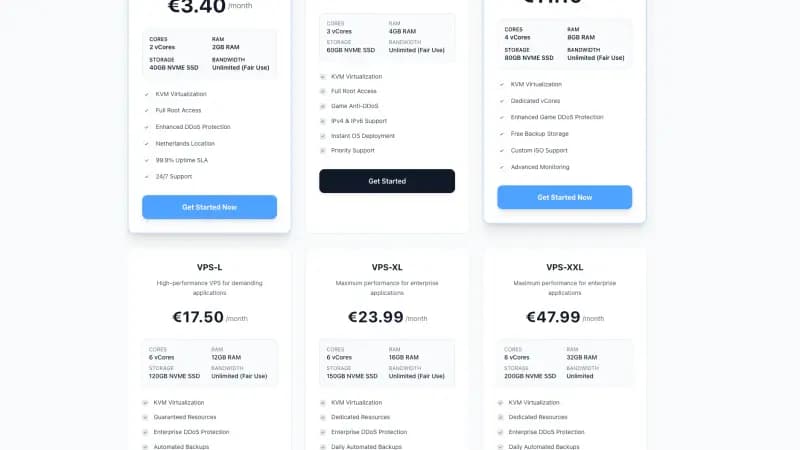
- Transparent pricing starting at €3.40/month with no hidden fees
- Free migration assistance from our technical team
Whether you need a cheap VPS for development, a Windows VPS for trading, or managed VPS hosting for your business, we've got the infrastructure and expertise to power your success.