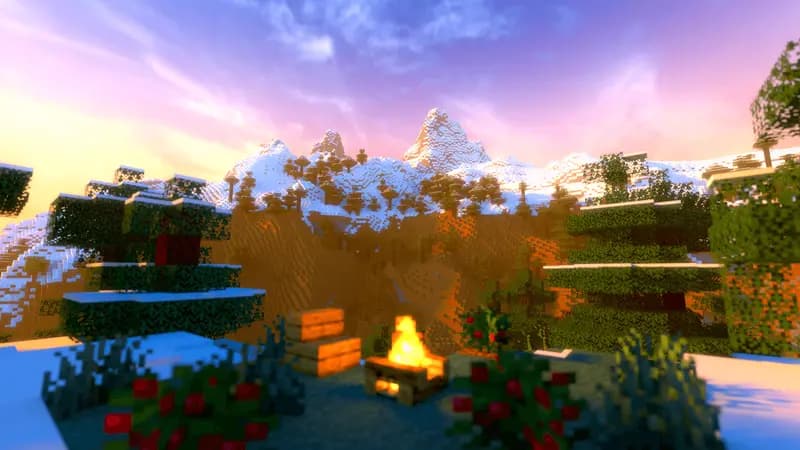
For over a decade, hosting a modded Minecraft server was relatively straightforward: you installed Forge. However, the ecosystem has fractured significantly in 2026. If you've been encountering cryptic "missing registry" errors, or if you're bewildered by the ongoing debate between Modrinth and CurseForge, you are experiencing the fallout of the great mod loader schism.
Today, administrators must navigate three primary mod loaders: NeoForge, Forge, and Fabric. Understanding the fundamental differences between their APIs is critical to ensuring your server boots successfully and performs optimally.
In this guide, we'll break down the history of the split, explain why these loaders are no longer interchangeable, and help you choose the correct platform for your community.
The Monolith Fractures: The Birth of NeoForge
To understand the current landscape, we have to look back at Minecraft version 1.20.1. During this period, a significant philosophical and structural disagreement occurred within the core development team of Forge. The result was a mass exodus of developers who subsequently created a "hard fork" of the project, which they named NeoForge.
The Compatibility Myth
When NeoForge first launched, the developers worked diligently to maintain cross-compatibility. For a brief period, you could load legacy Forge modifications onto a NeoForge server. This created a pervasive myth within the community that the two loaders were simply interchangeable brand names.
In 2026, this is absolutely false.
Modern iterations of NeoForge (specifically those used by heavy, contemporary modpacks like All The Mods 10 running on Minecraft 1.21.1) utilize completely distinct Application Programming Interfaces (APIs). The underlying registry systems have been entirely rewritten.
If you attempt to drop a modern Forge mod into the mods/ folder of a NeoForge server, the server will not simply ignore it; it will crash entirely, usually spitting out a wall of "missing registry" or "class not found" errors in the console. You must ensure that every single mod you download specifically matches the loader your server is running.
Fabric: The Lightweight Alternative
While the Forge/NeoForge civil war was raging, Fabric quietly solidified its position as the preferred loader for performance-conscious administrators.
Unlike the monolithic architecture of Forge and NeoForge-which hook deeply into the game engine to allow massive, sweeping changes-Fabric is designed to be incredibly lightweight and modular. It provides a minimal framework, relying on a robust ecosystem of API mods (like the Fabric API itself) to provide functionality.
The Power of Sodium and Lithium
The true strength of Fabric lies in its optimization mods. If you see search queries for sodium fabric, they are looking for the holy grail of Minecraft performance.
- Sodium: A rendering engine replacement that dramatically increases client-side frame rates and smooths out visual stutter.
- Lithium: A general-purpose server optimization mod that overhauls physics, mob AI, and block ticking, significantly improving server TPS without altering vanilla mechanics.
If your goal is to run a near-vanilla SMP (Survival Multiplayer) server with absolute maximum performance, Fabric is almost always the superior choice.
Modrinth vs CurseForge: The Distribution Battle
The schism isn't limited to the loaders; it extends to where you download the mods.
Historically, CurseForge was the undisputed king of mod distribution. However, many developers grew frustrated with its interface and monetization models. This led to the rise of Modrinth, an open-source, highly performant platform built from the ground up to respect developer autonomy.
Today, the community is split. Some developers exclusively upload to Modrinth, while others remain loyal to CurseForge. As a server administrator, you will frequently find yourself downloading mods from both platforms to assemble a complete pack.
Choosing the Right Loader for Your Server
How do you decide which loader to use in 2026?
- You want to run a massive, pre-built modpack (like ATM10): The choice is made for you. ATM10 utilizes NeoForge. You must install the NeoForge server binaries.
- You want a highly optimized, vanilla-plus experience: Choose Fabric and immediately install Lithium and Sodium/Phosphor.
- You are running legacy 1.12.2 or 1.16.5 modpacks: You will remain on legacy Forge, as NeoForge and Fabric do not natively support these older versions.
Simplifying the Installation Process
Navigating this fractured ecosystem via command-line Linux can be incredibly frustrating for new administrators. One typo in a startup script or a mismatched API version can result in hours of troubleshooting.
This is why we built Space-Node's control panel to handle the complexity for you. Whether you decide to run a heavy NeoForge environment for ATM10, a highly optimized Fabric server, or a legacy Forge instance, our panel features one-click installation capabilities. You select the loader and the version, and our system automatically provisions the correct binaries, startup flags, and Java versions required to get you online instantly.
Don't let the mod loader schism stop you from building your community. Choose your platform, and let the infrastructure handle the rest.
Deploy a Server with 1-Click Mod Loaders Today
Legal Notice
Legal Notice & Disclaimer: This article constitutes an independent, factual comparative review and critical analysis for educational purposes only. Space-Node is not affiliated with, endorsed by, or sponsored by any hosting provider mentioned herein. All brand names, logos, and trademarks referenced are the registered intellectual property of their respective owners and are used solely for identification and factual reference.
Fair Use & Review Rights: This review is protected commentary, comparison, and criticism. It is based on publicly available information, official pages where available, published documentation, and general hosting engineering analysis. Where hands-on testing is not explicitly stated in the article, no private benchmark or internal infrastructure access is implied. This constitutes lawful comparative review and criticism protected under fair use doctrine.
Factual Accuracy: Specific plan claims are based on public information available at the time of writing. Specifications, pricing, and service features can change, so readers should verify current details on the provider's official website before purchasing. We make no false or defamatory statements; criticism is limited to documented facts, clearly labeled opinion, or general hosting guidance.
No Consumer Confusion: This article makes clear that Space-Node offers distinct, independently-developed hosting infrastructure. We explicitly differentiate our services, pricing, and technical specifications. No reader could reasonably be confused about service provider identity.
Right to Comparative Advertising: Space-Node reserves the right to publish factual comparative information about competing services. This is a recognized right in consumer protection law and advertising standards. Accurate comparative reviews cannot constitute trademark violation, defamation, or unfair competition.
Limitation of Liability: Space-Node makes no warranty regarding third-party services reviewed. Readers are responsible for verifying information independently before purchasing. Space-Node disclaims liability for third-party service changes, outages, or policy modifications.
Space-Node Services: For Space-Node's own managed hosting solutions, visit Minecraft hosting or VPS hosting.