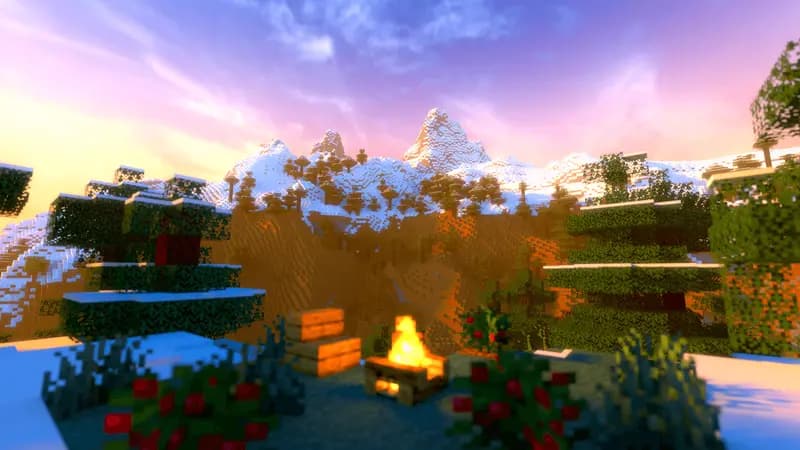
Playing Minecraft in VR transforms the experience. Blocks are life-sized, mobs are terrifying, and your builds feel genuinely massive. But hosting for VR players requires some specific considerations.
VR Client Options
Vivecraft (Java): The most complete Minecraft VR mod. Works with SteamVR headsets and can be used with PC-tethered Quest headsets via Air Link or Virtual Desktop.
Quest Native Bedrock: Minecraft Bedrock runs natively on Meta Quest. No mods needed, but limited to Bedrock servers.
PCVR via Shaders: Some players use VR mods alongside shader packs for a visually stunning experience. This is the most hardware-demanding option.
Server Setup for Vivecraft
Install the Vivecraft server plugin on your Paper/Purpur server. This plugin:
- Tracks VR player positions more accurately
- Sends roomscale data so other players see VR movements
- Adds VR-specific settings and commands
Download from the Vivecraft project and place in your plugins folder. Configuration is minimal; it works out of the box.
Optimization for VR
VR players are extremely sensitive to lag. In pancake (flat screen) Minecraft, a brief lag spike is annoying. In VR, it causes motion sickness. Your server needs to maintain stable 20 TPS without exception.
Recommended Settings
view-distance=6
simulation-distance=5
max-tick-time=60000
Lower view distance than normal because VR rendering is already demanding on the client side. The server needs to maintain perfect tick consistency, not render massive distances.
World Design
Builds designed for VR should consider:
- Scale: In VR, standing in a 3-block-tall room feels cramped. Use 4-5 block ceilings for comfortable spaces.
- Lighting: Dark areas are genuinely unsettling in VR. Use more lighting than you would in flat Minecraft.
- Pathways: Wide paths and staircases. VR locomotion feels awkward in tight spaces.
- Height: Tall structures and cliff edges trigger real vertigo. Use glass floors and guardrails deliberately.
Multiplayer Considerations
Not all your players will be in VR. A good VR server supports both VR and flat players together.
| Feature | VR Player | Flat Player |
|---|---|---|
| View | Full roomscale | Standard |
| Combat | Motion controlled | Click-based |
| Movement | Teleport or smooth | Standard WASD |
| Building | Reach varies | Standard reach |
Vivecraft's server plugin handles the differences automatically. VR and non-VR players see each other and interact normally.
Hardware Requirements
| Setup | Players | RAM | Notes |
|---|---|---|---|
| Small VR SMP | 2-5 | 4GB | Low view distance |
| Mixed VR/flat | 5-15 | 6-8GB | Standard optimization |
| VR event server | 15+ | 8-12GB | Low view distance, no heavy plugins |
The CPU is the bottleneck for VR consistency. The Ryzen 9 9950X is ideal because its consistent single-thread performance prevents the micro-stutters that cause VR motion sickness.
VR Minecraft is still a niche, but it's growing fast with standalone Quest headsets making VR accessible. A server optimized for VR players gives you a unique community angle that most other servers don't offer.
Quick 2026 Answer
Minecraft VR Hosting: Creating an Immersive World for Quest Users should be treated as a practical server setup problem, not only a settings page. Start with a small test server, change one setting at a time, and write down what changed before inviting players. That makes it much easier to fix lag, crashes or player complaints later.
Setup Checklist
- Match the Minecraft version, loader and plugin versions before testing.
- Keep a backup of the world and config folder before each change.
- Test with two or three players before opening the server to everyone.
- Watch console warnings for five minutes after startup.
- Keep view distance, simulation distance and plugin count sensible for the plan.
- Move to stronger hosting only after you know which part is actually limiting the server.
Common Beginner Mistakes
The most common mistake is changing too many things at once. A plugin update, a new datapack, a view distance change and a Java flag change can all cause different symptoms. If the server gets worse, you will not know which change caused it.
Another mistake is looking only at RAM. Minecraft also needs fast single core CPU speed and quick storage. A server with plenty of RAM can still lag if one thread is busy with entities, redstone, chunk loading or a heavy plugin.
Where to Go Next
For sizing and plan choice, use Minecraft hosting, Minecraft server requirements, Minecraft lag fixes. If this page helps, the best supporting screenshot is a before and after view of the setting being changed, plus a console or Spark screenshot showing that the server stayed stable after the change.
Real Test Routine
The easiest way to prove Minecraft VR Hosting: Creating an Immersive World for Quest Users is working is to test it on a copy before changing the live server. Make one controlled change, restart, join the server and watch the console. If the setting helps, write it down. If it makes the server worse, roll back immediately and try a smaller change.
Use a simple test loop. First, start the server with the old settings and note the player count, TPS, RAM use and console warnings. Second, change only one setting. Third, restart and repeat the same activity, such as flying through new chunks, loading a busy base or running the plugin command that normally causes trouble. This gives you a fair comparison instead of a guess.
For most small servers, the best first fixes are lower simulation distance, fewer heavy plugins, clean backups and enough CPU headroom. RAM helps when the server is genuinely running out of memory, but it will not fix a plugin that runs slow code every tick.
When to Move to Better Hosting
Move hosting only when the test shows the server is limited by CPU, disk or network instead of a bad config. Signs include TPS drops during normal play, slow chunk generation on an optimized server, console warnings under light load and players in one region getting constant ping spikes. If the same world runs fine on a local test but struggles online, hosting quality is likely part of the problem.
Screenshot or Generated Image Target
A useful supporting image for this page should show the actual setting, console, panel or workflow being discussed. Avoid a generic stock image if possible. A simple generated diagram is fine when it explains the flow better than a screenshot.
- Capture the main settings screen or config file.
- Add one close crop of the important value.
- Add one result screenshot after the fix or setup is working.
- Keep private IPs, tokens, emails and customer names hidden.