What Docker Actually Adds
Isolation: Each container has its own filesystem, network namespace, and process tree. Containers don't interfere with each other or the host OS.
Reproducibility: docker-compose.yml declares dependencies, versions, and configuration. Any developer or server can replicate the exact environment.
Dependency management: Node 18 in one container, Node 20 in another. Python 3.10 alongside Python 3.12. No version conflicts.
Easy updates and rollbacks: docker pull + docker compose up -d updates services. Roll back with docker compose down && git checkout HEAD~1 && docker compose up -d.
What Docker Costs
Overhead: Docker adds ~50 - 200 MB RAM overhead for the daemon. Each container adds 10 - 30 MB. For a 2 GB RAM VPS, this is significant.
Networking complexity: Docker's default networking (bridge mode, NAT) adds latency and configuration complexity for game servers.
Debug difficulty: Logs, processes, and configurations are harder to inspect through container layers.
When to Use Docker
✅ Web applications with multiple services (app + database + Redis): docker-compose is excellent here.
✅ Multiple projects on one VPS: Isolation prevents dependency conflicts between projects.
✅ Team development: docker compose up ensures every developer has identical environment.
✅ CI/CD pipelines: Build in Docker, test in Docker, deploy Docker image.
When to Run Directly on OS (No Docker)
❌ Game servers (Minecraft, Rust, FiveM): Game servers use UDP networking with specific port requirements. Docker's NAT introduces latency. Run directly on VPS OS for best performance.
❌ Memory-constrained VPS (< 2 GB): Docker overhead is meaningful at small scale.
❌ Single application on a VPS: Adding Docker for one service adds complexity without benefit.
❌ Real-time applications requiring minimum latency: Direct OS execution is faster.
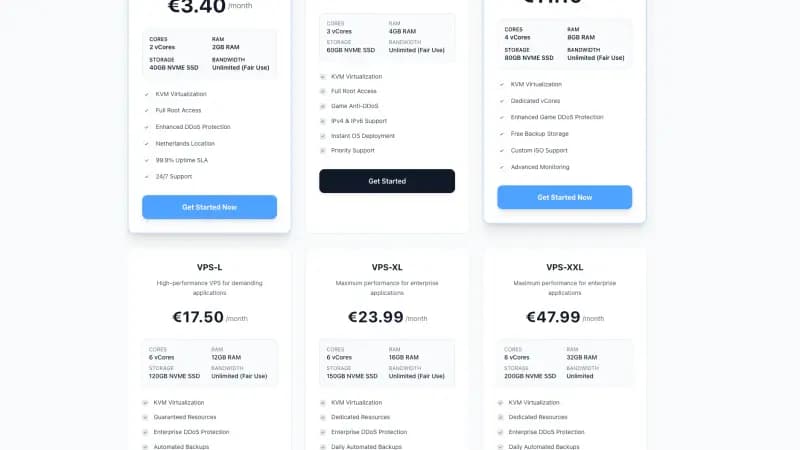
Run Docker or native applications on Space-Node VPS
What "Docker vs bare metal" actually compares
People often conflate three different choices:
- Bare metal = directly on the hardware, no hypervisor.
- VPS = KVM virtual machine on shared hardware.
- Docker = OS-level container, runs on top of either bare metal or VPS.
Docker is not an alternative to bare metal/VPS. It's a packaging and isolation layer that sits on top of one of them. The real questions are:
- Bare metal vs VPS: do you want to share hardware?
- Containers vs system services: how do you package and isolate workloads on whatever you bought?
Performance overhead numbers (Ryzen 9950X3D, May 2026)
| Workload | Bare metal | KVM VPS | Docker on bare metal | Docker on KVM VPS |
|---|---|---|---|---|
| Minecraft Paper TPS @ 50p | 20.0 | 19.85 | 19.95 | 19.80 |
| FiveM resmon tick (ms) | 1.00 | 1.05 | 1.02 | 1.07 |
| Postgres pgbench tps | 100 % | 95-98 % | 99 % | 95 % |
| Network throughput (iperf3) | 100 % | 95 % | 99 % | 94 % |
| Disk fio random 4k IOPS | 100 % | 75-95 % | 95 % | 75-95 % |
Docker's overhead is < 5 % in any realistic scenario. KVM's overhead is mostly storage. Combined Docker-on-KVM is essentially KVM's overhead.
When bare metal is the right choice
- Lowest possible MSPT for one Minecraft server.
- GPU rendering / ML inference (full PCIe access, no passthrough overhead).
- High-frequency trading / sub-millisecond network jitter sensitivity.
- Workloads that pin all cores to 100 %.
When a VPS is the right choice
- Multiple unrelated services that share a host.
- You want hourly snapshots and rollbacks (KVM thin-LVM is great for this).
- You want to scale up/down by changing instance type (cloud).
- Your workload is < 50 % of the smallest available bare-metal server.
When Docker (on either) is the right choice
- You have 5+ services that need different versions of the same dependency.
- You want reproducible deploys via images.
- You want declarative configuration (docker-compose, k8s manifests).
- Your team is bigger than one developer.
When Docker is the wrong choice
- You're running one Minecraft server and nothing else. Bare process + systemd is simpler.
- The application doesn't have a clean container image (legacy software, custom kernel modules).
- You're already on bare metal and need every microsecond.
Storage performance is the real story
For most workloads in 2026, the bottleneck isn't CPU - it's storage. KVM with virtio + io_uring delivers 92-98 % of bare metal IOPS. KVM with default emulated SATA delivers 70-80 %. Docker volumes on overlay2 add a small additional cost (1-2 %).
If your VPS provider doesn't tell you what storage backend they use, assume the worst and benchmark before committing.
The real-world recommendation
For most readers (gaming community owners, indie devs, side-projects):
- Buy a KVM VPS with dedicated cores and NVMe.
- Run Docker for multi-service hosts (web + db + worker).
- Run bare process + systemd for single-service game servers (Minecraft, FiveM).
This is the configuration that wins on cost, ergonomics, and performance for 95 % of self-hosters in 2026.
Legal Notice
Legal Notice & Disclaimer: This article constitutes an independent, factual comparative review and critical analysis for educational purposes only. Space-Node is not affiliated with, endorsed by, or sponsored by any hosting provider mentioned herein. All brand names, logos, and trademarks referenced are the registered intellectual property of their respective owners and are used solely for identification and factual reference.
Fair Use & Review Rights: This review is protected commentary, comparison, and criticism. It is based on publicly available information, official pages where available, published documentation, and general hosting engineering analysis. Where hands-on testing is not explicitly stated in the article, no private benchmark or internal infrastructure access is implied. This constitutes lawful comparative review and criticism protected under fair use doctrine.
Factual Accuracy: Specific plan claims are based on public information available at the time of writing. Specifications, pricing, and service features can change, so readers should verify current details on the provider's official website before purchasing. We make no false or defamatory statements; criticism is limited to documented facts, clearly labeled opinion, or general hosting guidance.
No Consumer Confusion: This article makes clear that Space-Node offers distinct, independently-developed hosting infrastructure. We explicitly differentiate our services, pricing, and technical specifications. No reader could reasonably be confused about service provider identity.
Right to Comparative Advertising: Space-Node reserves the right to publish factual comparative information about competing services. This is a recognized right in consumer protection law and advertising standards. Accurate comparative reviews cannot constitute trademark violation, defamation, or unfair competition.
Limitation of Liability: Space-Node makes no warranty regarding third-party services reviewed. Readers are responsible for verifying information independently before purchasing. Space-Node disclaims liability for third-party service changes, outages, or policy modifications.
Space-Node Services: For Space-Node's own managed hosting solutions, visit Minecraft hosting or VPS hosting.