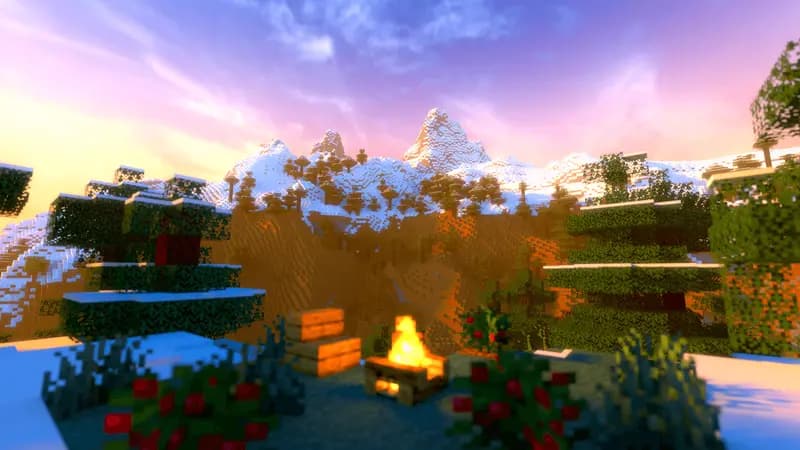
BlueMap is the best 3D web map for Minecraft servers. Players open a URL and see your world in full 3D, rotatable, zoomable, with player markers in real time. It looks incredible.
The problem: BlueMap stores rendered map tiles on disk. A 1500-chunk render radius generates 5GB or more of tile data. On a server plan with 15-30GB of total storage, that is a significant chunk gone to map tiles.
Here is how to keep BlueMap running without letting it eat your entire disk.
Understanding the Storage
BlueMap creates tile files in a bluemap/web/maps/ directory. Each rendered chunk gets stored as compressed tile images at multiple zoom levels. More terrain rendered = more tiles = more storage.
The default render distance is unlimited. BlueMap will try to render every chunk that has ever been loaded. On an active server where players explore thousands of chunks in every direction, this grows quickly.
Step 1: Set a Render Distance Limit
Open plugins/BlueMap/maps/overworld.conf (or the map config for your world).
Find the render-distance or max-render-distance setting:
max-render-distance: 500
Change this to a reasonable value:
| Server Size | Suggested Render Distance | Approx Storage |
|---|---|---|
| Small (1-10 players) | 300 blocks | ~500MB |
| Medium (10-30 players) | 750 blocks | ~2GB |
| Large (30+ players) | 1500 blocks | ~5GB+ |
Most players only care about the area around spawn and their bases. A 750-block radius covers spawn and the nearby builds without rendering empty wilderness.
Step 2: Use Render Boundaries
Instead of a circular render distance, you can define rectangular boundaries to render only specific areas:
render-boundaries: [
  {
    min: { x: -1000, z: -1000 }
    max: { x: 1000, z: 1000 }
  }
]
This only renders the 2000x2000 block area around spawn. Players with far-out bases can request their area to be added as an additional boundary.
Step 3: Reduce Resolution
BlueMap renders tiles at multiple resolution levels. The highest resolution (low-zoom) tiles consume the most storage. You can reduce the number of zoom levels:
hires-tile-size: 64
lowres-tile-size: 256
Increasing the tile size reduces the total number of tiles. The map looks slightly less detailed at maximum zoom but saves significant storage.
Step 4: Exclude BlueMap from Backups
If you run automated backups (which you should), exclude the BlueMap tiles directory. Map tiles are regenerable. Your world data is not. Backing up map tiles doubles your backup size for no benefit.
If your backup script uses tar or rsync:
tar -czf backup.tar.gz world/ plugins/ --exclude='plugins/BlueMap/web/maps'
Or with rsync:
rsync -av --exclude='plugins/BlueMap/web/maps' /server/ /backups/
If BlueMap data gets lost, you regenerate it by running /bluemap render in the server console. It takes time but the world data is safe.
Step 5: Use an External Storage Target
For large servers, store BlueMap tiles on a separate disk or a mounted network drive instead of the main server storage:
In core.conf:
webroot: "/mnt/external/bluemap/web"
This moves all tile data to an external mount point. Your main server SSD stays clean for world data and plugins.
Step 6: Purge Old Tiles
If your map grew too large and you want to start fresh:
/bluemap purge overworld
This deletes all rendered tiles for the overworld. Then re-render with a tighter boundary:
/bluemap render overworld
BlueMap Addons for Storage Control
BlueMap Floodgate Skin Support: If you run a crossplay server, this addon displays Bedrock player skins on the web map. Does not affect storage.
BlueMap Offline Player Markers: Shows where players last logged off. Minimal storage impact.
BlueMap Area Control: Community addon that lets admins define render areas per-world with in-game commands instead of editing config files.
Storage Calculator
Quick math for planning:
- BlueMap stores roughly 3-5MB per 100 rendered chunks at default resolution
- A 1000-block radius = about 3,000 chunks = about 100-150MB
- A 3000-block radius = about 27,000 chunks = about 1-1.5GB
- Rendering the entire world on an active server = easily 5-10GB+
Set your render distance based on your available storage minus a 20% buffer for world growth and plugins.
Space-Node plans include NVMe SSD storage. The panel file manager shows your disk usage in real time so you always know exactly how much space BlueMap is consuming. Check the plans here.