If you run a FiveM server, you already know the painful part. Everything looks fine in testing, then real players join and suddenly you get crashes, rubberbanding, and random script errors. Most of the time it is not "FiveM being FiveM". It is your hosting, your resource limits, or both.
This guide is written for non-technical owners. I will explain what actually matters when choosing hosting in Europe, why Netherlands is a strong location, and how to pick the right plan so your server stays stable.
Table of Contents
- Why location matters in Europe
- The specs that actually affect FiveM
- The most common hosting traps
- Choosing a plan based on your server type
- A quick checklist before you buy
1. Why location matters in Europe
Europe is big, and your players are spread out. Where the server sits affects ping, how smooth driving feels, and how many "desync" complaints you get.
Netherlands is a popular choice because Amsterdam has very strong internet routing to many European countries. If your community is mixed across the EU, Netherlands is often a safe "middle ground" with consistently low latency.
If your server is mostly one country, a nearby location can still be best. A Germany-only community can do great in Frankfurt. A UK-only community can do great in London. But if you have players from the UK, France, Germany, Spain, and Scandinavia all at once, Netherlands often gives a good average experience.
2. The specs that actually affect FiveM
FiveM is not like a normal website. It is a real-time game server with heavy scripting, constant networking, and a lot of little tasks that happen every second.
The biggest drivers of stability are CPU single-core speed, consistent CPU access, and enough RAM.
CPU matters because the main game loop has to run smoothly. A server can show "only 40 percent CPU usage" and still lag, because the important thread is overloaded. This is why a fast modern CPU is usually better than "many slow cores".
RAM matters because scripts, assets, and OneSync need memory. When RAM runs out, the server does not always fail gracefully. You can get freezes, timeouts, and random-looking crashes.
Storage matters less for live gameplay, but it matters for restarts, loading resources, and saving data. Fast NVMe helps with restarts and with big servers that write a lot.
Network matters for player feel. Good routing and stable throughput reduces packet loss and those moments where players teleport or vehicles jitter.
3. The most common hosting traps
If you want to avoid headaches, watch for these patterns.
Overselling. Cheap hosts often sell the same CPU to too many customers. Your server is fine at 3 AM, then terrible at 8 PM when the node is busy.
Fake "cores". Some plans advertise cores, but you get a small fraction of a shared CPU. In practice, the server performs like it has much less.
Hidden limits. Some hosts limit disk IOPS, network throughput, or background processing. It looks fine on paper, then your database or logging falls behind.
No real DDoS protection. FiveM servers get attacked, especially if you grow. If the provider cannot absorb attacks, you will have random downtime.
4. Choosing a plan based on your server type
If you run a small friends server with a light framework and a few scripts, you can start smaller. But if you run serious roleplay, heavy assets, and many resources, start bigger than you think.
A simple way to think about it is this.
If you plan 16 players, you are usually fine with a modest plan, as long as your scripts are clean.
If you plan 32 players, you should treat it like a real production server, because OneSync and databases start to matter more.
If you plan 64 players, you need strong CPU and enough RAM, and you must keep your resource list healthy. This is where many "budget" hosts fail.
If you want help choosing, start from your real target, not your dream number. If you are at 20 players today and growing, plan for 40, not 20.
5. A quick checklist before you buy
Use this as a final sanity check.
First, choose a location that matches where most players are.
Second, pick a provider that is transparent about CPU and does not oversell.
Third, make sure you have enough RAM for your framework, assets, and the player count you want.
Fourth, make sure DDoS protection is included.
Fifth, make sure you can upgrade easily, because FiveM communities grow fast when things go well.
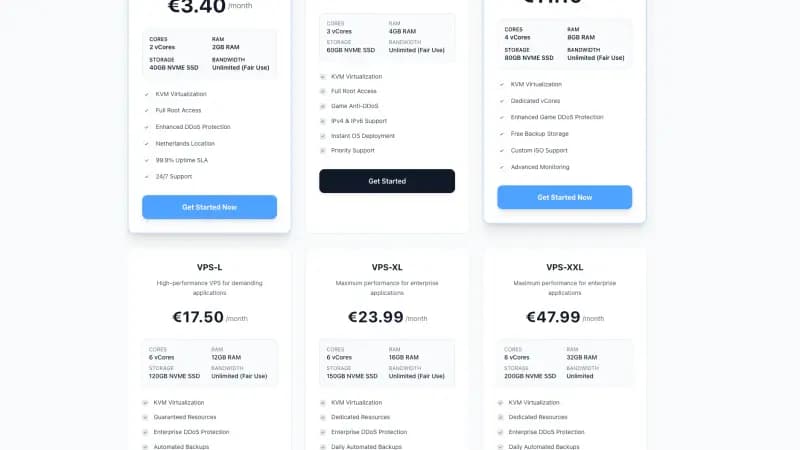
If you want a hosting page that matches these requirements, see the FiveM plans on Space-Node at /fivem-hosting. If you also stream content, the streaming servers page at /streaming is useful too.
If you want another troubleshooting-style read, this post pairs well with /blog/why-your-fivem-server-keeps-crashing.